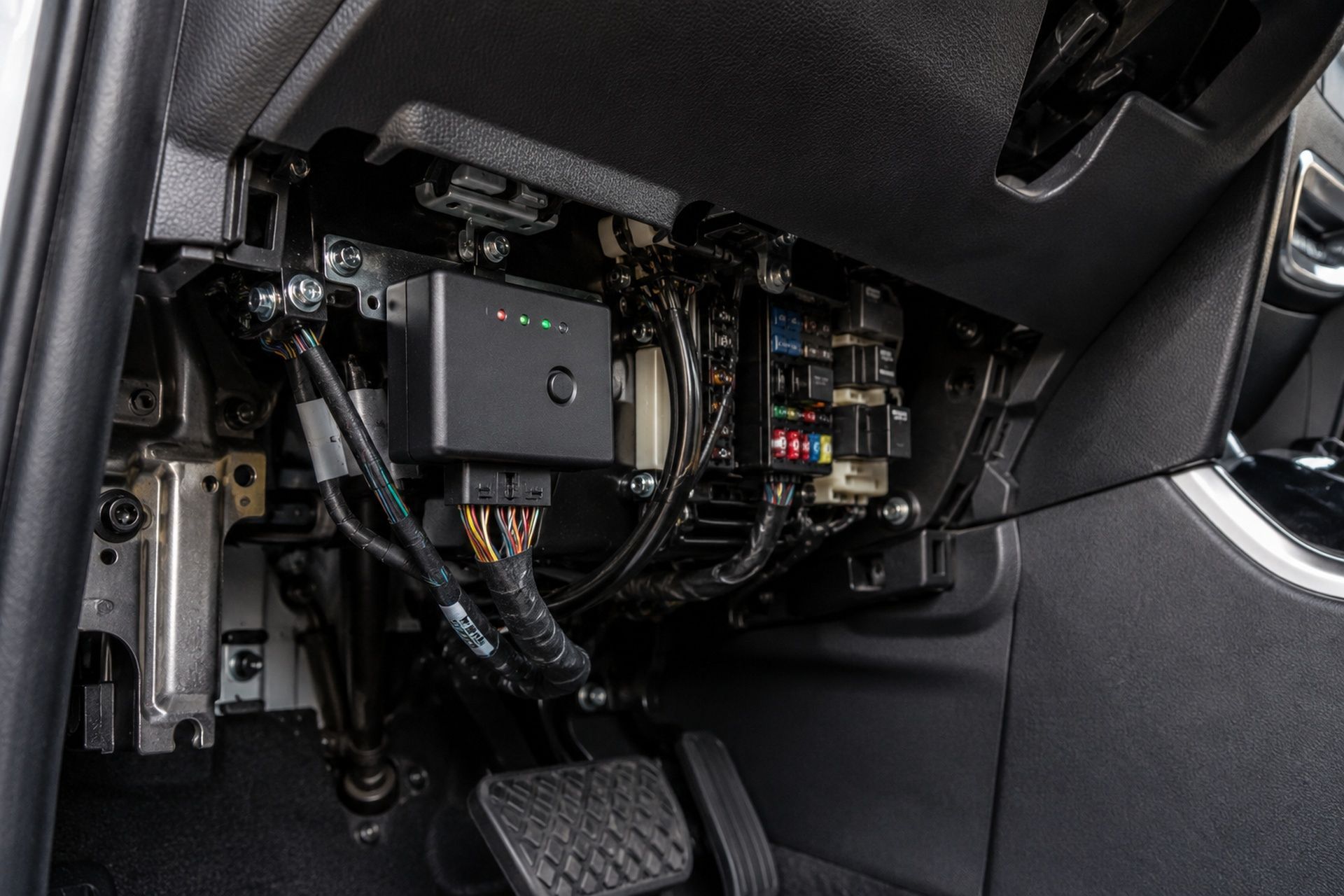
Getting your license back after a DUI or OWI in Wisconsin means dealing with one unavoidable requirement: an ignition interlock device (IID). The process can feel overwhelming, especially when you're trying to figure out where to go, what it costs, and how to stay compliant once the device is installed. Wisconsin's interlock laws have shifted in recent years, and 2026 brings a few changes worth knowing about. If you're looking for approved providers and installation locations across the state, this guide covers everything from certified manufacturers to financial assistance programs that can lower your out-of-pocket costs. Whether you're in downtown Milwaukee or a small town in northern Wisconsin, there's a path forward.
Wisconsin IID Laws and Requirements for 2026
Wisconsin takes OWI offenses seriously, and the state's interlock requirements reflect that. Understanding who needs a device and under what circumstances can save you from costly mistakes or extended restrictions.
Who is Required to Install an Ignition Interlock Device?
Any driver convicted of a second or subsequent OWI offense in Wisconsin must install an IID on every vehicle they own or operate. First-time offenders with a blood alcohol concentration (BAC) of 0.15 or higher also face mandatory installation. Repeat offenders typically carry the requirement for one to three years, depending on the number of prior convictions and the severity of the offense.
Drivers who refuse a chemical test at the time of arrest also trigger the IID mandate. Wisconsin law treats refusals harshly: the interlock period often mirrors or exceeds what you'd face with a standard OWI conviction. If you hold a commercial driver's license, the rules get even stricter, and the IID must be installed on your personal vehicle even if the offense occurred off-duty.
Court Orders vs. DOT Administrative Suspensions
There are two separate tracks that can land you with an interlock requirement. The court issues its own order as part of your criminal sentence, while the Wisconsin Department of Transportation (DOT) imposes an administrative suspension independently. These can overlap, but they don't always align in timing or duration.
One significant change for 2026 is that Wisconsin Act 210 eliminates previous 30-day and 45-day waiting periods for occupational licenses, allowing drivers immediate eligibility. That means you can apply for an occupational license with IID right away instead of sitting out a mandatory waiting period. This is a real shift for people who need to drive to work or medical appointments and can't afford weeks without transportation.
Approved Wisconsin Interlock Providers and Technology
Not every interlock device on the market is legal in Wisconsin. The state maintains a list of approved manufacturers, and using a non-certified device can result in violations or extended restrictions.
State-Certified Manufacturers for 2026
Wisconsin's DOT certifies specific IID manufacturers that meet the state's technical and reporting standards. The most commonly approved providers in 2026 include Intoxalock, Smart Start, LifeSafer, and Draeger. Each company operates its own network of installation and service centers throughout the state.
Choosing a provider isn't just about proximity. Look at factors like customer service responsiveness, how easy it is to schedule calibration appointments, and whether they offer 24/7 support lines. A missed calibration or a device malfunction at 6 AM on a Monday morning can derail your entire week if you can't reach someone for help.
Camera and GPS Requirements for Compliance
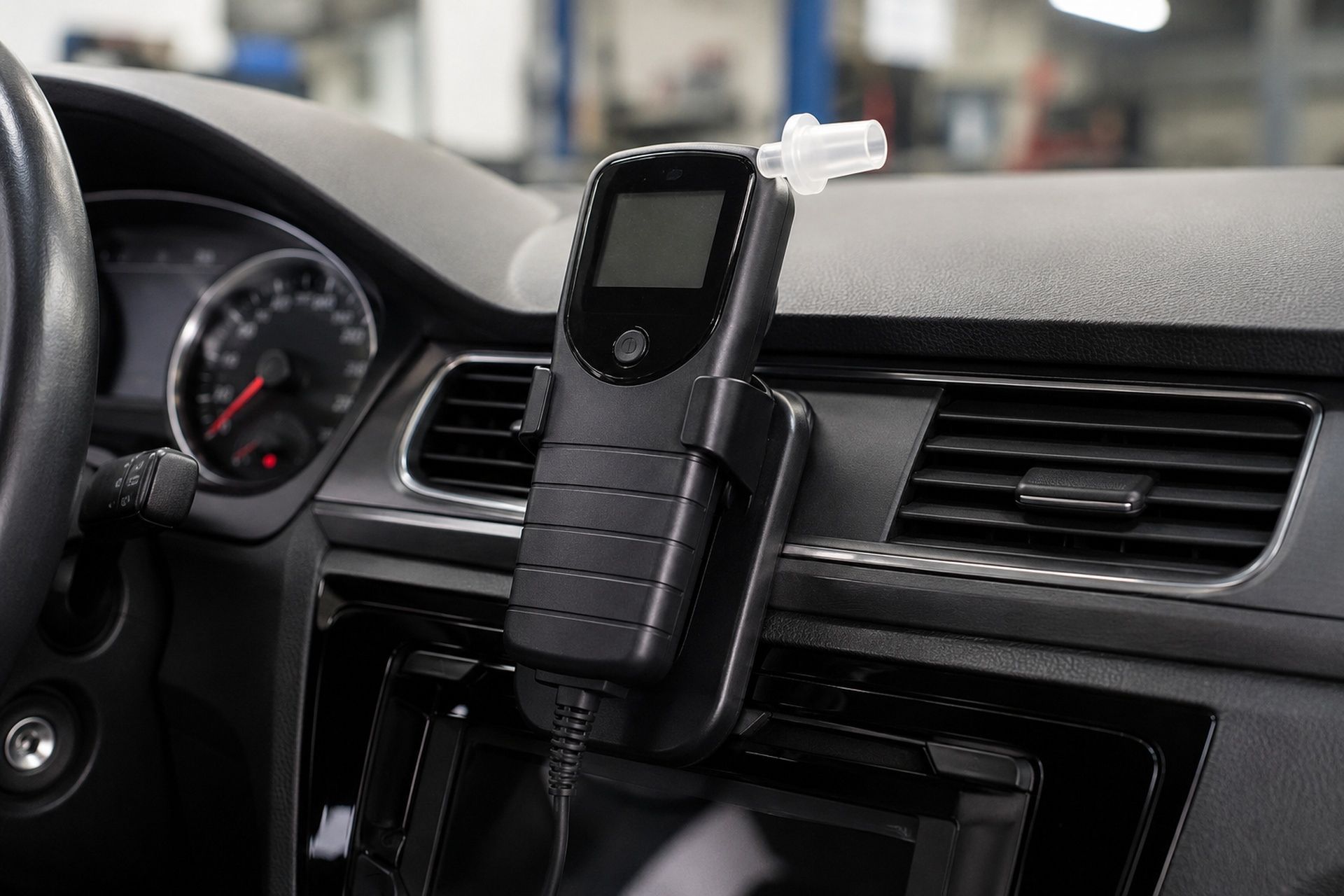
Most Wisconsin-approved devices now include a camera that photographs the person providing the breath sample. This prevents someone else from blowing into the device on your behalf. The photos are stored and can be reviewed by your monitoring authority.
Some court orders or DOT conditions also require GPS tracking, which logs every location where the vehicle starts. If your order includes GPS, make sure your provider's device supports it: not all models do. Failing to use a device that meets your specific court or DOT requirements counts as a violation, even if the device itself is state-certified.
| Feature | Intoxalock | Smart Start | LifeSafer |
|---|---|---|---|
| Camera verification | Yes | Yes | Yes |
| GPS tracking | Optional | Optional | No |
| Real-time reporting | Yes | Yes | Limited |
| Smartphone app | Yes | Yes | No |
| Hum-tone retest | Yes | No | Yes |

By: Evan Marcotte
SR-22 Insurance Specialist
INDEX
SR22 Direct connects drivers with licensed insurance agents who file SR22 and FR44 certificates for those needing proof of financial responsibility — available in all 50 states.
We help drivers across the country — from Florida, Virginia, Texas, and California, coast to coast — get matched with licensed insurance professionals who specialize in DUIs, license suspensions, and high-risk violations. SR22 Direct is not an insurance agency. We partner with a nationwide network of licensed agents and top-rated carriers so every driver can connect with a qualified professional for compliant, affordable, and often same-day SR22 or FR44 filing wherever they need it.
Finding Installation Locations Throughout Wisconsin
Once you know which provider you're going with, the next step is finding a location that works for your schedule and geography.
Service Centers in Milwaukee and Madison Metro Areas
Milwaukee and Madison have the highest concentration of interlock installation centers in the state. Milwaukee alone has multiple locations for each major provider, spread across the metro from West Allis to Waukesha. Madison service centers are clustered around the east and west sides, with a few options in surrounding communities like Sun Prairie and Middleton.
| Provider | Milwaukee Area Locations | Madison Area Locations | Avg. Install Time |
|---|---|---|---|
| Intoxalock | 4-5 centers | 2-3 centers | 60-90 minutes |
| Smart Start | 3-4 centers | 2 centers | 45-75 minutes |
| LifeSafer | 3 centers | 1-2 centers | 60-90 minutes |
| Draeger | 2-3 centers | 1-2 centers | 60-90 minutes |
Appointments typically need to be booked a few days in advance, though some locations offer same-day installation if you call early enough. Bring extra time: installations usually run 60 to 90 minutes.
Accessing Mobile Installation Services in Rural Counties
If you live in a rural county like Bayfield, Iron, or Forest, the nearest service center might be a two-hour drive. Several providers offer mobile installation, where a technician comes to your location. This service usually costs an extra $50 to $100, but it can be worth every penny if you'd otherwise need to arrange a ride to a distant city.
Call your provider directly to ask about mobile availability in your county. Coverage varies by season and technician schedules, so plan ahead rather than waiting until the last minute. Some providers also partner with local auto shops that serve as satellite installation points, giving you more options than what appears on the provider's main website.
New Title
Cost Breakdown and Financial Assistance Programs
The financial side of ignition interlock installation in Wisconsin catches a lot of people off guard. Between installation fees, monthly leasing, and calibration appointments, costs add up fast.
Installation, Leasing, and Calibration Fees
Expect to pay between $70 and $150 for the initial installation. Monthly leasing fees typically run $70 to $100, depending on the provider and whether your device includes GPS or camera features. Calibration appointments happen every 30 to 60 days and cost $25 to $50 per visit.
Over a 12-month IID period, total costs often land between $1,000 and $1,500. That's a significant expense, especially if you're also paying court fines, increased insurance premiums, and SR-22 filing fees. Speaking of SR-22 insurance, providers like SR22 Direct can help you get your filing completed quickly and affordably: their same-day filing process means one less thing to worry about while you're sorting out your interlock requirements.
Applying for Indigency Funding to Reduce Costs
Wisconsin offers an indigency program for drivers who can't afford IID costs. If your household income falls below certain thresholds, you may qualify for reduced installation and monthly fees. The application process involves submitting proof of income to your IID provider, who then adjusts your rate accordingly.
Don't skip this step out of embarrassment or assumption that you won't qualify. The income thresholds are more generous than most people expect, and the savings can be substantial: sometimes cutting monthly fees in half. Contact your provider or the Wisconsin DOT directly to get the application paperwork started before your installation appointment.
The Installation Process and Maintaining Compliance
Showing up prepared for your installation appointment and understanding the compliance rules afterward will save you from unnecessary headaches and potential violations.
Required Documentation for Your Appointment
Bring your court order or DOT documentation specifying the IID requirement, a valid form of photo identification, and your vehicle registration. Some providers also ask for proof of insurance, including your SR-22 certificate if one has been filed. If you need an SR-22 and haven't arranged one yet, SR22 Direct offers instant online processing that can have your certificate ready within minutes.
Your vehicle needs to be in reasonable working condition. If your car has electrical issues or a dying battery, the technician may not be able to complete the installation. Get any known electrical problems fixed before your appointment to avoid rescheduling.
Avoiding Violations and Lockout Penalties
The interlock doesn't just test you when you start the car. Rolling re-tests happen at random intervals while you're driving, typically every 15 to 45 minutes. The device signals you with a tone, and you have a few minutes to provide a breath sample. If you miss the window or fail the test, the device logs a violation and may trigger your horn and lights to flash until you pull over and turn off the engine.
Every data point gets recorded: start-up tests, rolling re-tests, failed samples, missed tests, and any attempts to tamper with the device. This data is uploaded during calibration visits and sent directly to the DHSMV. Think of the device as a constant witness. There's no way to game it, and trying to do so only creates more problems.
The most common violations are missed calibration appointments, failed breath tests, and tampering alerts. Each violation gets reported to the court and DOT, and multiple violations can extend your IID period or trigger additional penalties.
Here's what trips people up most often:
- Eating or drinking anything within 15 minutes before blowing into the device (even mouthwash can cause a failed reading)
- Ignoring the rolling retest prompts while driving: you must pull over safely and provide a sample when prompted
- Letting someone else start your vehicle, even if they're sober
- Missing a calibration appointment by even one day
Set calendar reminders for every calibration date. Rinse your mouth with water and wait before providing a sample if you've recently eaten. These small habits prevent the vast majority of violations.
Steps for Successful Removal and License Restoration
Getting the IID removed isn't automatic. You need to actively confirm that your restriction period has ended, that you have no outstanding violations, and that your provider has submitted a clean compliance report to the Wisconsin DOT. Contact your provider about 30 days before your expected removal date to start the process.
Once the device is removed, you'll need to visit a DMV service center to have the IID restriction lifted from your driving record. Bring your removal confirmation from the provider, proof of continued insurance (including your SR-22 if still required), and your current license. The DOT will issue an updated license without the interlock restriction.
Keep in mind that your SR-22 requirement may extend beyond your IID period. Wisconsin typically requires SR-22 filings for three years following an OWI conviction, so don't cancel your policy prematurely. Letting your SR-22 lapse triggers an automatic license suspension: a mistake that sends you right back to square one.
FAQ
How long does an IID stay on my vehicle in Wisconsin? It depends on the offense. First-time offenders with high BAC typically face 12 months, while repeat offenders may have requirements lasting one to three years or longer.
Can I drive a work vehicle without an IID installed? Only if your employer provides written consent and the vehicle is used strictly for work purposes. You'll need specific court or DOT approval for this exemption.
What happens if I get a violation on my interlock device? Single violations are reported but may not immediately extend your restriction. Multiple violations or tampering attempts can add months to your IID period and result in additional legal consequences.
Do I need SR-22 insurance along with my IID? Yes, most OWI convictions in Wisconsin require both an IID and an SR-22 filing. These are separate requirements with different durations.
Can I switch IID providers during my restriction period? You can, but it requires coordination between providers and notification to the DOT. There may be additional installation fees, so weigh the costs before switching.
New Title
Your Next Move
Getting through Wisconsin's ignition interlock process is manageable when you know the rules, choose the right provider, and stay on top of compliance. The 2026 changes to occupational license waiting periods are a genuine improvement for drivers who need to keep working while meeting their legal obligations. Start by confirming your specific court or DOT requirements, pick an approved provider with a convenient location, and gather your documents before booking that installation appointment. If you still need SR-22 insurance as part of your reinstatement, reach out to SR22 Direct for fast, affordable filing that keeps the process moving forward.
The interlock doesn't just test you when you start the car. Rolling re-tests happen at random intervals while you're driving, typically every 15 to 45 minutes. The device signals you with a tone, and you have a few minutes to provide a breath sample. If you miss the window or fail the test, the device logs a violation and may trigger your horn and lights to flash until you pull over and turn off the engine.
Every data point gets recorded: start-up tests, rolling re-tests, failed samples, missed tests, and any attempts to tamper with the device. This data is uploaded during calibration visits and sent directly to the DHSMV. Think of the device as a constant witness. There's no way to game it, and trying to do so only creates more problems.
About the Author:
Evan Marcotte
As the founder of SR22 Direct, I'm passionate about helping high-risk drivers get back on the road quickly, affordably, and without the runaround. My goal is to make SR22 and FR44 filings simple to understand and stress-free to complete — from your first quote to your certificate in hand, same day.
SR22 Insurance — Nationwide
SR22 & Every Filing Type — All 48 States
SR22 for all 48 states. Non-owner options for drivers without a vehicle.
FR44 for Florida and Virginia DUI filings. We cover every scenario.
SR22 · All 48 States
SR22 Auto Insurance
Affordable SR22 auto policies with same-day electronic filings. We shop all major carriers — Dairyland, Progressive, Bristol West, National General, and more.
SR22 · No Vehicle
Non-Owner SR22
Don't own a car but need to reinstate your license? Non-owner SR22 provides the liability coverage required to file — at lower rates than a standard auto policy.
High Risk Nationwide
DUI Insurance
Following a DUI conviction, most states require an SR22 alongside a high-risk auto policy. We specialize in this exact situation and find you the lowest rate available.
SR22 · LICENSE REINSTATEMENT
Suspended License Insurance
Need insurance to reinstate a suspended license? We handle the SR22 filing your state requires so you can get your driving privileges restored as fast as possible.
FR44 · FL & VA ONLY
FR44 Insurance
Florida and Virginia require FR44 instead of SR22 after a DUI. FR44 carries higher liability limits — we specialize in both states and file your certificate the same day.
FR44 · NO VEHICLE
Non-Owner FR44 Insurance
Required in Florida and Virginia if you've had a DUI but don't own a vehicle. An FR44 non-owner policy meets state filing requirements at a lower cost than standard FR44 coverage.
Why SR22 Direct
10+ Years. Licensed in All 48 States.
SR22 Experts.
Immediate Processing
We know time is critical. Our streamlined process gets your SR22 or FR44 filed the same day — minimizing any delay in getting back on the road.
Lowest Rates Guaranteed
We shop all major high-risk carriers — Dairyland, Progressive, Bristol West, National General — so you get the lowest rate available in your state.
SR22 & FR44 Specialists
Most insurers see SR22 and FR44 as a headache. We specialize in it. Our agents know every state's requirements inside-out, including FR44's higher limits.
Truly Nationwide
Licensed agents in all 48 SR22 states, plus FR44 specialists in Florida and Virginia. Wherever you are, we have the right agent for your filing.